Study in Germany from Africa: free tuition, strict paperwork
Germany is the one big study destination where a degree from a leading public university can cost you no tuition at all - which is why around 402,000 international students were enrolled there in the 2024/25 winter semester, a record, and more than four in ten of them study engineering. Students from Nigeria, Ghana, Kenya, Cameroon, Morocco, Egypt, Tunisia, Ethiopia, Uganda, Zimbabwe and South Africa apply every intake from their home countries: the application runs through uni-assist or the university’s own portal, and the admission letter, the blocked account and the visa appointment at the German embassy or consulate all follow from there.
The price of free tuition is planning. Germany checks three things strictly: whether your school certificate gives you direct university entry, whether you can prove €11,904 for your first year, and whether your language level matches the language of your degree. It also offers three kinds of institution. Research universities - including the TU9 technical universities such as TUM, RWTH Aachen and KIT - are theory-heavy and lead into research; universities of applied sciences (Hochschulen, formerly Fachhochschulen) teach in smaller groups, usually build an internship semester into the degree and are often the faster route into a German job; private universities teach mostly in English and admit more flexibly, but charge €8,000-€20,000 a year - so confirm they are staatlich anerkannt (state-recognised) before you pay anything.
Admission to a German university: Studienkolleg, direct entry and uni-assist
For a bachelor’s, Germany first asks whether your school-leaving certificate counts as a university entrance qualification. WASSCE and NECO alone do not: Nigerian and Ghanaian school leavers either complete the Studienkolleg, a two-semester foundation course that ends with the Feststellungsprüfung, or finish one year at a recognised university at home, which opens direct entry to related subjects. KCSE follows the same pattern, while a South African NSC with a bachelor’s pass is one of the few African certificates accepted directly. A baccalauréat from Cameroon, Senegal, Côte d’Ivoire or Morocco can lead either way depending on country, stream and grades - so check your exact certificate in the DAAD admission database before you pay a single application fee.
Public Studienkollegs are usually free apart from the semester contribution, but they teach in German: the entrance exam tests German at about B1-B2 and, for most streams, maths, and places are scarce, so apply to several at once. Pick the stream that matches your future degree - T for engineering and sciences, M for medicine and life sciences, W for economics, G for humanities, S for languages. For a master’s the test is different: your bachelor’s must come from a university Germany recognises (rated H+ in anabin) and match the programme in content and credits. Your CGPA is converted to the German scale, and many programmes want 2.5 or better - in practice usually a second-class upper. An HND normally counts only as entry to a bachelor’s, so HND holders need a full bachelor’s first.
Most universities route international applications through uni-assist, which checks your documents before the university sees them, for €75 for the first application and €30 for each further one in the same semester; others use their own portal or ask for a uni-assist VPD first. Typical deadlines are 15 July for the winter semester and 15 January for the summer semester, but many master’s programmes close in spring, and the uni-assist check alone takes four to six weeks - so submit at least eight weeks before the deadline. Order your WAEC/NECO verification, certified copies and any sworn translations early: a document that arrives after the deadline usually means waiting for the next intake.
Want UniBridgeEurope to do all of this for you?
We take African students from first choice to arrival in Europe: university shortlist, applications, student visa, flights, bank account and housing. Start with a €99 strategy call, or choose the package that comes with an admission guarantee.
Tuition, the blocked account and living costs: what Germany really costs
At almost every public university, bachelor’s and master’s degrees are tuition-free for everyone, students from outside the EU included. You pay only a semester contribution of about €150-€450, which funds student services and at most universities includes the Deutschlandsemesterticket - unlimited local and regional transport across the whole country for €37.80 a month from the 2026/27 winter semester. Two exceptions matter: Baden-Württemberg charges non-EU students €1,500 per semester at all its public universities - Heidelberg, Stuttgart, Freiburg, Mannheim, Tübingen and KIT included - and TUM in Munich charges €2,000-€3,000 per semester for a bachelor’s and €4,000-€6,000 for a master’s. Private universities start at about €8,000 a year, and their students must still prove the same living costs for the visa.
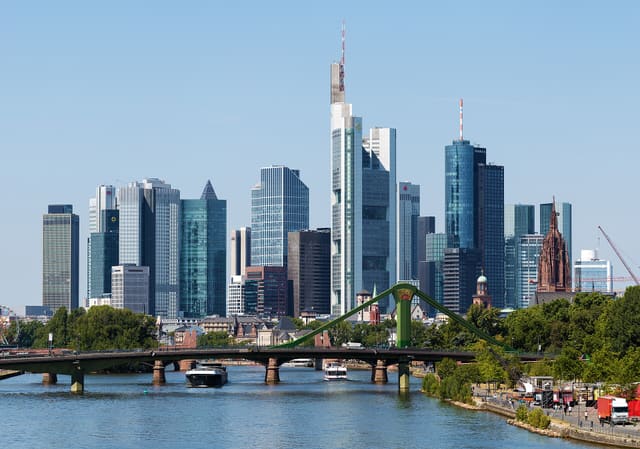
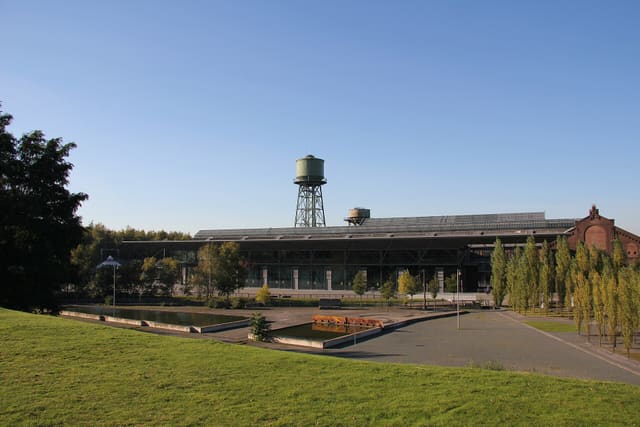
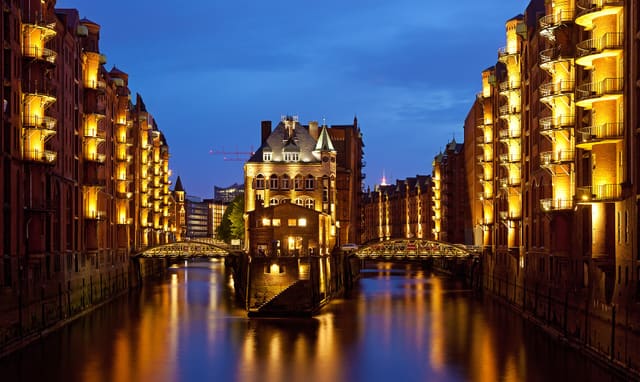
The bigger number is the money the embassy wants to see. For 2026 the blocked account (Sperrkonto) must hold €11,904, paid out to you at €992 a month once you arrive - still your money, just released in instalments. Providers charge roughly €150-€300 a year in fees, and a formal obligation letter (Verpflichtungserklärung) from a sponsor living in Germany or a scholarship such as DAAD’s can replace all or part of it. Real life costs more in the big cities: budget about €950 a month in Bochum or Duisburg and €1,200-€1,400 in Munich, Frankfurt or Hamburg. Rent decides most of it - €300-€450 for a student-hall room, €450-€800 for a room in a shared flat - plus about €140 a month for health insurance. You may work 140 full or 280 half days a year, and at the 2026 minimum wage of €13.90 an hour an essentially tax-free minijob of up to €603 a month closes most of the gap.
German language, the student visa and the 18 months after graduation
Germany offers almost 2,400 degree programmes taught entirely in English - but only about 420 of them are bachelor’s. That is the real shape of the system: master’s in English, bachelor’s mostly in German. English-taught programmes usually ask for IELTS 6.5 or TOEFL iBT 88-90, and some accept a medium-of-instruction letter; German-taught degrees need DSH-2, TestDaF with 4 in every section or an equivalent C1 certificate. Even on an English programme, reach B1 German before you graduate - most jobs outside tech still expect it. Once you hold your admission letter, the blocked-account confirmation and health insurance, book the national (D) student visa at once: queues in Lagos, Abuja, Accra, Nairobi and Yaoundé can run for weeks or months. If you still have to sit a Studienkolleg entrance exam, a study-applicant visa lets you come for up to nine months.
After your degree, Germany gives you an 18-month residence permit to look for work, and you may take any job while you search. A position that matches your degree moves you onto a skilled-worker permit, which has no fixed salary threshold, or onto the EU Blue Card, which in 2026 requires €50,700 a year - or €45,934.20 for recent graduates and shortage fields such as engineering, IT, medicine and the natural sciences. Two years of qualified work after a German degree can be enough for a settlement permit; Blue Card holders with B1 German qualify after just 21 months, and spouses and children may join you. Pick the city above that fits your subject and budget, work through its universities and costs - or send us one WhatsApp message and we will plan the route with you.