Greece · Western Greece
Study in Patras: universities, costs and careers for international students
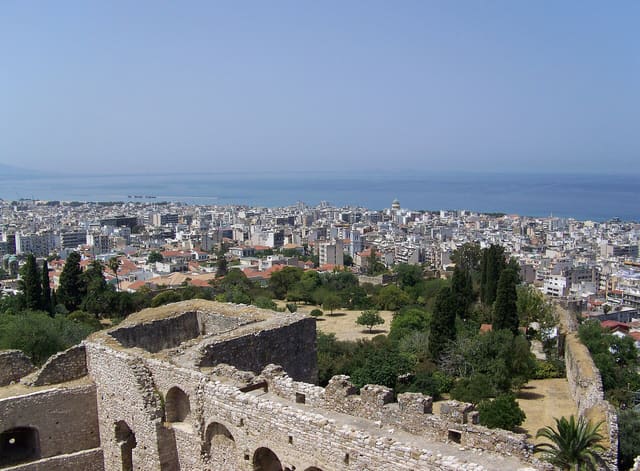
Patras is where Greek engineering research concentrates. The University of Patras is the third-largest in the country and, unusually for Greece, sits on one hillside campus above the city with a science park, an incubator and national research institutes attached to it. The city below is a working port with overnight ferries to Italy, the largest carnival in Greece and rents around half of what Athens asks. The trade-off is scale: outside the university, its institutes and its spin-outs, the graduate job market is thin, and most Patras graduates who stay in Greece move to Athens. Here is what to weigh.
Why Patras
Before the detail, the snapshot - what a specialised research city gives you that a capital does not.
- The University of Patras is the third-largest university in Greece and its engineering and computing schools are among the strongest in the country - electrical and computer engineering, mechanical, civil, chemical, and computer engineering and informatics
- A research cluster on and around the campus: the Patras Science Park, the Institute of Chemical Engineering Sciences and the Industrial Systems Institute, which is where most of the region’s applied-research funding lands
- A six-year English-taught medical degree, in the same band as Athens, Thessaloniki and Crete but in a much cheaper city
- Living costs roughly half of Athens - the single biggest reason students who could go to the capital choose not to
- The port is the main link between Greece and Italy, with overnight ferries to Ancona, Bari, Brindisi and Venice, and the Rio-Antirrio bridge and the Athens motorway put the capital within about three hours
Universities & popular courses
One large university dominates the city, so the question is less which institution than which school - and whether that school teaches in Greek or English.
- University of Patras: engineering across electrical and computer, mechanical and aeronautical, civil, chemical, environmental and computer engineering and informatics - the last of these one of the best-regarded computing departments in Greece
- Sciences and health: medicine, pharmacy, biology, physics, chemistry, mathematics and materials science, with a university hospital attached to the campus
- Business, economics and the humanities are also taught here, along with the departments the university absorbed from the former technological institutes of western Greece in 2018-2019
- The Hellenic Open University, Greece’s national distance-learning university, is headquartered in Patras - relevant if you are combining study with work
- Curriculum: engineering runs as a five-year integrated diploma treated as master’s-level across the EU, medicine six years, most other bachelor’s degrees four, and an official master’s one to two
- Most popular with international students: medicine, computer engineering and informatics, electrical engineering, pharmacy and materials science
Career prospects & ROI
A research city rather than a job market - the return is the degree and the lab experience, and for most graduates the first job is somewhere else.
- Industry connections: the science park and the research institutes run the internship and thesis pipeline, and the microelectronics, embedded-systems and industrial-automation groups have long-standing links with Greek and European manufacturers
- Spin-outs from the computing and electrical engineering departments are the local employers that matter, and a supervised thesis with one of them is the normal way in
- Be realistic about the rest: outside the university, Patras runs on the port, logistics, food processing and services. Most graduates looking for a corporate first job move to Athens or abroad
- Work while you study: the residence permit for study allows up to 20 hours a week of paid work. The student jobs here are hospitality, tutoring and seasonal work rather than corporate internships
- After you graduate: the standard Greek 12-month job-search residence permit applies, converting into a work permit on a qualifying offer, and a Patras engineering diploma travels well across the EU
- The honest trade-off: you are buying a strong, cheap, research-led degree in a small city, not a graduate job market. If proximity to employers is what you need on day one, Athens is the better call
Cost of living in Patras
Estimates for the 2026 academic yearA student in Patras should budget around 680 € a month. The heaviest line by far is rent: a room in a shared flat goes for about 280 €, and most land between 220 € and 370 €.
- Room in a shared flat usually 220 € – 370 €
- 280 €
- Food and groceries
- 200 €
- Student travel pass
- 15 €
- Health insurance
- 25 €
- Phone, internet, electricity
- 70 €
- Books, sport, going out
- 90 €
- Monthly total
- 680 €
Ranked 1 of 4 on cost among the cities we cover in Greece, cheapest first.
What things cost here, against the EU
Across the whole shopping basket Greece sits at 83.0, where the EU average is 100 (2024).
EU average = 100
Consumer prices rose 2.9% over 2025.
Where these numbers come from
The monthly budget is our own estimate, compiled from what student unions, universities and national student services publish. Use it to plan with — it is not a quote.
The price levels, inflation and rent figures are published statistics: Eurostat purchasing power parities and, for German states, the Federal Statistical Office (Destatis).
Success stories
Students who crossed the bridge

“I wasted a year trying alone. After the strategy call I knew exactly which documents I was missing - three months later I had my admission.”Read full story →

“They prepared my visa file so well the interview took ten minutes. They even helped my parents understand the blocked account.”Read full story →

“With the VIP pack I arrived in Finland with my room, bank account and even my airport pickup organised. I just had to study.”Read full story →
What it costs
The cheapest of the four cities on this list, and by some distance.
- Public tuition: EU and EEA students pay nothing for a Greek-taught bachelor’s; non-EU students admitted through the foreign-nationals quota pay a set annual fee, generally around EUR 1,500 for a Greek-taught degree
- The English-taught six-year MD sits in the national EUR 12,000-17,000 a year band; most official master’s programmes cost EUR 1,500-4,000 for the whole degree, and several are free
- Living costs: budget EUR 550-750 a month. A room in a shared flat runs EUR 250-350 and a small studio in the centre often lands under EUR 350 - the same money buys noticeably more space than in Athens
- Subsidised student life: the university canteen serves meals free to students who qualify on income, the halls of residence are means-tested, and textbooks come free through the national Eudoxus system. In a city this size the halls cover a larger share of the intake than they do in Athens
- Scholarships: IKY state scholarships, the Onassis Foundation postgraduate awards, fully funded Erasmus Mundus joint master’s degrees, and departmental research assistantships that are genuinely reachable at a research-heavy university this size
- Compulsory on top: the visa fee, the residence-permit fee, health cover until your AMKA is issued, and the consulate’s proof of means for each month of your stay
Life, safety & culture
A mid-sized port city that empties in August and turns itself over to its students the rest of the year.
- Language: less English is spoken here than in Athens or on the islands, so Greek matters sooner. The university runs Greek courses for international students - take them from the first semester
- Safety: Patras is a quiet city by any European measure, and the campus sits above the town with its own shuttle buses. The usual port-city caution around the harbour at night is the extent of it
- The student population is a large share of the city, which makes the housing market, the bars and the bus timetable all revolve around the academic year - and makes September the month everything fills up
- The Patras Carnival is the biggest in Greece and shuts the city down for weeks before Lent; the university empties, and it is worth planning coursework around
- Healthcare: the university hospital is the referral centre for the whole of western Greece, and the public system covers you once your AMKA and residence permit are in place
- The compensations: a beach coastline within reach, the mountains of Achaia behind the city, ferries to Italy from the port and Olympia an hour and a half away
How to apply & the bureaucracy
The same national machinery as everywhere else in Greece - centralised for Greek-taught bachelor’s degrees, run by the department for everything above them.
- Bachelor’s, Greek-taught: apply through the Ministry of Education’s foreign-nationals quota in its fixed summer window, with places allocated centrally on your school-leaving results
- Bachelor’s, English-taught: the English MD has its own admissions process, its own deadlines and its own document list. Apply directly to the University of Patras
- Master’s: department by department, mostly for a September start, with applications open roughly February to June. Research-heavy departments here often ask for a short research proposal on top of the standard package
- Language proficiency: IELTS 6.0-6.5 or TOEFL iBT 79-90 for English-taught programmes; a B2 certificate of attainment in Greek for Greek-taught ones
- Apostille your certificates at home, then have them translated into Greek by a recognised sworn translator; foreign degrees go through DOATAP for recognition, which is slow enough to start the day you have the diploma
- After acceptance, apply for the national (D) student visa at the Greek consulate and allow one to three months. On arrival, file for the residence permit for study at the Achaia immigration office within your first weeks - the queues are shorter here than in Athens, which is a genuine advantage
Read these guides next
Want UniBridgeEurope to do all of this for you?
We take African students from first choice to arrival in Europe: university shortlist, applications, student visa, flights, bank account and housing. Start with a €99 strategy call, or choose the package that comes with an admission guarantee.