Türkiye · Southeastern Anatolia
Study in Gaziantep: universities, costs and careers for international students
Gaziantep is an industrial city that most guides skip, which is a mistake if you are an engineer. It is one of Türkiye’s largest exporters, the world’s biggest producer of machine-made carpets, and a food-processing centre with a UNESCO gastronomy designation attached to it. The University of Gaziantep teaches much of its engineering in English, living costs are among the lowest in the country, and there is a real local job market - which is rare outside the big three cities. It is also close to the Syrian border and was affected by the 2023 earthquakes, so go in informed. Here is what to weigh.
Why Gaziantep
Before the detail, the snapshot - what you actually get by studying here.
- A genuine industrial economy: one of Türkiye’s largest organised industrial zones, thousands of factories, and export markets across the Middle East and Africa
- The University of Gaziantep: a large state university whose engineering faculty teaches substantially in English
- Among the lowest living costs of any city in this guide, with a large student population to match
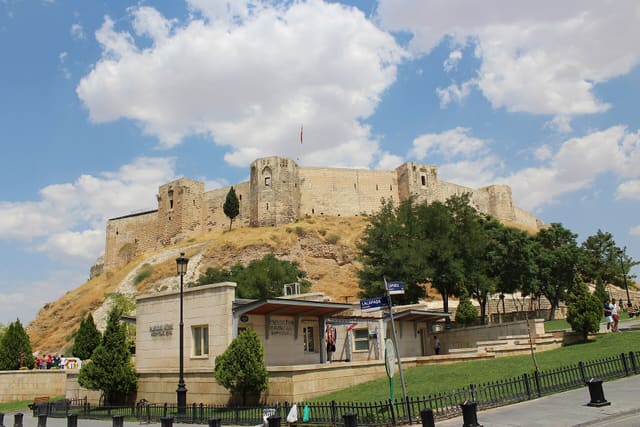
- A UNESCO City of Gastronomy with one of the best-preserved old towns in the southeast, the Zeugma Mosaic Museum and a food culture students talk about for years afterwards
Universities & popular courses
One large state university, one newer state university and a well-run private option.
- University of Gaziantep (GAÜN): mechanical, electrical and electronics, civil, industrial, food and textile engineering, plus medicine, dentistry and pharmacy - with English-medium teaching across much of the engineering faculty
- Food engineering is the standout: this is Türkiye’s food-processing capital, and the department is built around the industry that surrounds it
- Gaziantep Islam Science and Technology University: a newer state university with medicine, engineering and Islamic sciences, and a growing international intake
- Hasan Kalyoncu University: private, English-medium programmes in engineering, architecture, business and psychology, with scholarships for international applicants
- Curriculum: four-year bachelor’s, one-to-two-year master’s, and an English preparatory year for English-medium programmes
Career prospects & ROI
One of the few smaller Turkish cities where you can plausibly study and then be hired locally.
- Industry connections: carpet and textile manufacturing, food processing (pistachios, spices, confectionery), plastics, chemicals and machinery - the organised industrial zones employ hundreds of thousands
- Food engineering, industrial engineering and mechanical engineering graduates have the clearest local route into work
- Gaziantep exports heavily to the Middle East and Africa, so Arabic or a West African language plus a Turkish engineering degree is a genuinely marketable combination here
- Work while you study: the standard national rules apply - a part-time work permit after year one on a bachelor’s, from the start on a master’s
- Erasmus+ exchange is available at all three universities
Cost of living in Gaziantep
Estimates for the 2026 academic yearA student in Gaziantep should budget around 410 € a month. The heaviest line by far is rent: a room in a shared flat goes for about 120 €, and most land between 90 € and 180 €.
- Room in a shared flat usually 90 € – 180 €
- 120 €
- Food and groceries
- 150 €
- Student travel pass
- 12 €
- Health insurance
- 18 €
- Phone, internet, electricity
- 50 €
- Books, sport, going out
- 60 €
- Monthly total
- 410 €
Ranked 2 of 8 on cost among the cities we cover in Türkiye, cheapest first.
Cheapest on our list: Karabük, at about 400 € a month. →What things cost here, against the EU
Across the whole shopping basket Türkiye sits at 46.8, where the EU average is 100 (2024).
EU average = 100
Consumer prices rose 34.9% over 2025.
Where these numbers come from
The monthly budget is our own estimate, compiled from what student unions, universities and national student services publish. Use it to plan with — it is not a quote.
The price levels, inflation and rent figures are published statistics: Eurostat purchasing power parities and, for German states, the Federal Statistical Office (Destatis).
Success stories
Students who crossed the bridge

“I wasted a year trying alone. After the strategy call I knew exactly which documents I was missing - three months later I had my admission.”Read full story →

“They prepared my visa file so well the interview took ten minutes. They even helped my parents understand the blocked account.”Read full story →

“With the VIP pack I arrived in Finland with my room, bank account and even my airport pickup organised. I just had to study.”Read full story →
What it costs
With Karabük, the cheapest option in this guide.
- Tuition at the two state universities for international students: roughly USD 300-1,500 a year, medicine higher; Hasan Kalyoncu runs roughly USD 4,000-9,000 with scholarships
- Living costs: budget EUR 250-400 a month, which is as low as it goes in Türkiye
- Accommodation: KYK dormitories and cheap private student housing near the Şehitkamil campus, typically EUR 70-160 a month
- Transport: a tram line and cheap student-priced buses cover the city
- Türkiye Bursları covers Gaziantep universities, which have long-standing international student communities, particularly from Arabic-speaking and African countries
Life, safety & culture
A conservative, hospitable, food-obsessed city - and one where you should read the regional situation honestly.
- A large, long-established international and Arabic-speaking population means foreign students are unremarkable here and halal food is universal
- Safety: the city itself is heavily policed and everyday crime is low, but it sits about 100 km from the Syrian border - check your own government’s current travel advice for the southeastern provinces before you commit
- The February 2023 earthquakes hit the region; Gaziantep itself suffered less damage than neighbouring provinces and universities have been operating normally since, but ask any university you apply to about building safety certification for its campus and dormitories
- Language: Turkish and Arabic dominate; English is limited outside the university
- Healthcare: the University of Gaziantep runs a large teaching hospital serving the whole southeast, and SGK cover applies as elsewhere
How to apply & the bureaucracy
Accessible admissions with a long track record of enrolling international students.
- Bachelor’s: apply directly to each university, usually May to August, on a national certificate such as WAEC or NECO, the SAT, or the university’s own YÖS exam
- Master’s: direct application for September and February intakes, with transcripts, references and a statement of purpose
- English proficiency: IELTS 6.0 or the university’s own exemption exam for English-medium engineering; Turkish-medium programmes need a TÖMER C1 certificate
- Entry requirements are considerably more accessible than at the top Istanbul and Ankara universities, and the international offices are used to African applicants
- After acceptance: student visa at the Turkish embassy, then the residence permit at the Gaziantep migration office within 30 days of arrival
Read these guides next
Want UniBridgeEurope to do all of this for you?
We take African students from first choice to arrival in Europe: university shortlist, applications, student visa, flights, bank account and housing. Start with a €99 strategy call, or choose the package that comes with an admission guarantee.