Türkiye · Black Sea
Study in Karabük: universities, costs and careers for international students
Karabük is not a famous city, and that is precisely why it is on this list. Karabük University has spent fifteen years building one of the biggest international student communities in Türkiye - thousands of students from Somalia, Nigeria, Chad, Sudan, Palestine, Syria and Afghanistan - so an African student arriving here joins an existing community rather than founding one. Costs are the lowest of any city in this guide, the university is engineering-heavy, and Safranbolu, a UNESCO World Heritage Ottoman town, is eight kilometres away. Here is what to weigh.
Why Karabük
Before the detail, the snapshot - what you actually get by studying here.
- Karabük University hosts one of the largest international student populations of any university in Türkiye, with students from more than 100 countries and a well-staffed international office that exists because of them
- The cheapest student city in this guide - rent, food and transport all run well below Istanbul, Ankara or Izmir
- A genuinely engineering-first university, built alongside Kardemir, the iron and steel works the town grew around
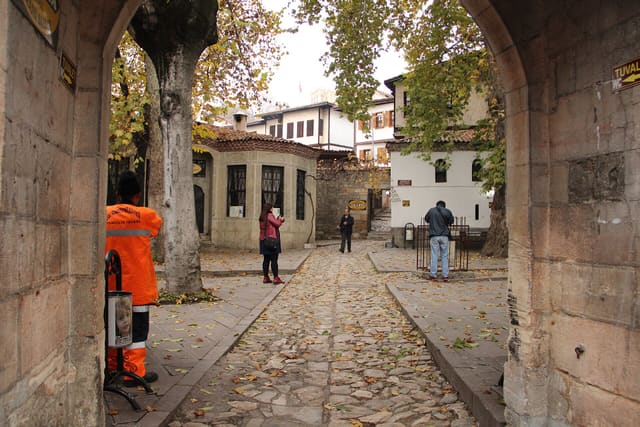
- Safranbolu, a UNESCO World Heritage Ottoman town, is a fifteen-minute bus ride away, and the Black Sea coast is under two hours
Universities & popular courses
One university, a wide catalogue, and an admissions process built for international applicants.
- Karabük University (KBÜ): metallurgical and materials engineering, mechanical, mechatronics, civil, industrial, computer and biomedical engineering - the core of the institution
- Beyond engineering: medicine, dentistry, business administration, international relations, nursing and Islamic sciences, plus a large postgraduate school
- A significant number of programmes are taught fully in English, which is unusual for a state university outside the big cities - check the language tag on each programme
- The university’s iron and steel research institute gives materials and metallurgy students access to serious lab facilities
- Curriculum: four-year bachelor’s, one-to-two-year master’s, with English or Turkish preparatory years depending on your programme’s language
Career prospects & ROI
Set expectations correctly: the local job market is small, so the value here is a cheap accredited degree plus mobility.
- Local industry: Kardemir, one of Türkiye’s oldest steel producers, plus the associated engineering and manufacturing firms in the province - relevant if you are in metallurgy, materials or mechanical engineering
- For everyone else, the realistic plan is to graduate cheaply and then move - to Istanbul, Ankara or Bursa for work, or abroad for a master’s
- A Turkish degree is Bologna-compliant and comes with a Diploma Supplement in English, which is what makes onward applications to EU master’s programmes straightforward
- Erasmus+ exchange semesters are available and heavily promoted here, and they are the cheapest way to add a European semester to your CV
- Work while you study: the same national rules - a part-time work permit after your first year on a bachelor’s, from the start on a master’s. Local part-time work is limited, so budget as if there is none
Cost of living in Karabük
Estimates for the 2026 academic yearA student in Karabük should budget around 400 € a month. The heaviest line by far is rent: a room in a shared flat goes for about 110 €, and most land between 80 € and 160 €.
- Room in a shared flat usually 80 € – 160 €
- 110 €
- Food and groceries
- 150 €
- Student travel pass
- 12 €
- Health insurance
- 18 €
- Phone, internet, electricity
- 50 €
- Books, sport, going out
- 60 €
- Monthly total
- 400 €
Ranked 1 of 8 on cost among the cities we cover in Türkiye, cheapest first.
What things cost here, against the EU
Across the whole shopping basket Türkiye sits at 46.8, where the EU average is 100 (2024).
EU average = 100
Consumer prices rose 34.9% over 2025.
Where these numbers come from
The monthly budget is our own estimate, compiled from what student unions, universities and national student services publish. Use it to plan with — it is not a quote.
The price levels, inflation and rent figures are published statistics: Eurostat purchasing power parities and, for German states, the Federal Statistical Office (Destatis).
Success stories
Students who crossed the bridge

“I wasted a year trying alone. After the strategy call I knew exactly which documents I was missing - three months later I had my admission.”Read full story →

“They prepared my visa file so well the interview took ten minutes. They even helped my parents understand the blocked account.”Read full story →

“With the VIP pack I arrived in Finland with my room, bank account and even my airport pickup organised. I just had to study.”Read full story →
What it costs
This is the cheapest route to a recognised university degree that appears in this guide.
- Tuition for international students: roughly USD 300-1,200 a year for most bachelor’s programmes, with medicine and dentistry higher
- Living costs: budget EUR 250-400 a month, all in - the lowest figure of any city on this list
- Accommodation: KYK state dormitories and private student residences in the town, typically EUR 60-150 a month, many within walking distance of the campus
- Transport: the campus is served by cheap municipal minibuses, and most students walk
- Türkiye Bursları covers Karabük, and the university is a frequent placement for scholarship holders - which is part of why the international community is so large
Life, safety & culture
A small, quiet, conservative town where the university is the main event - and where you will not be the only foreigner.
- The international student community is the single biggest draw: African, Arab and Central Asian student associations are long established, and halal food and mosques are everywhere
- Language: little English is spoken in the town itself. The university runs Turkish courses and you will need them - though the international campus community operates in English and Arabic too
- Safety: a small town with very low crime, and the university runs its own campus security and student support services
- Winters are cold and snowy in the Western Black Sea, and the town is small - weekends mean Safranbolu, the Black Sea coast or the bus to Ankara
- Healthcare: Karabük University has its own training and research hospital, and SGK cover applies as elsewhere in Türkiye
How to apply & the bureaucracy
The most accessible admissions process in this guide - the university is set up to enrol international students at scale.
- Bachelor’s: apply online through the university’s international student portal, usually with several application rounds between May and August
- Accepted qualifications: a national school-leaving certificate such as WAEC, NECO or the Kenyan KCSE, the SAT, or the university’s own entrance exam - no single exam is mandatory, which removes the most common barrier
- Master’s: direct application with transcripts, references and a statement of purpose, for September and February intakes
- Language: English-medium programmes need IELTS 5.5-6.0 or an equivalent; Turkish-medium programmes need a TÖMER C1 certificate, usually earned in a preparatory year on site
- After acceptance: student visa at the Turkish embassy, then the residence permit at the Karabük migration office within 30 days - the university’s international office walks new students through this in groups
Read these guides next
Want UniBridgeEurope to do all of this for you?
We take African students from first choice to arrival in Europe: university shortlist, applications, student visa, flights, bank account and housing. Start with a €99 strategy call, or choose the package that comes with an admission guarantee.