England · Hertfordshire
Study in Hertfordshire: universities, costs and careers for international students
Hertfordshire is the county immediately north of London, and for international students it means one thing: the University of Hertfordshire in Hatfield. It is a large, modern, campus-based university with a very substantial international intake, sitting 25 minutes by train from London King’s Cross - close enough to work and interview in the capital, far enough that rent costs roughly half. The county around it is where Britain builds spacecraft and shoots films. Here is what to weigh.
Why Hertfordshire
Before the detail, the snapshot - what you actually get by studying here.
- The University of Hertfordshire: two connected campuses in Hatfield, a very large international student body and a free 24-hour student bus service between campuses and the town
- London in 25 minutes by train from Hatfield to King’s Cross - you get the London job market without the London rent
- A genuinely campus-based experience: accommodation, library, sports village, student union and lecture halls in one place, which is rare in the UK and much easier as a first-year abroad
- Serious local employers - Airbus Defence and Space in Stevenage, Warner Bros. Studios Leavesden, Ocado Technology in Hatfield and GSK in Stevenage
Universities & popular courses
One university, but a wide and deliberately vocational course list.
- Aerospace and automotive engineering: Hertfordshire has one of the largest engineering schools of its kind in the UK, with a flight simulator, wind tunnels and a Formula Student team
- Computer science, cyber security, data science and games development - the games art and design courses have a strong industry reputation
- Business, accounting and finance at Hertfordshire Business School, plus nursing, paramedic science, physiotherapy and pharmacy, all with clinical placements in the NHS
- Film, media production and animation, taught in a county where much of the UK film industry actually works
- Curriculum: three-year bachelor’s (four with a sandwich placement year) and twelve-month master’s, with January intakes on many courses
Career prospects & ROI
Local employers you would normally have to move to a capital for, plus London within commuting distance.
- Industry connections: Airbus Defence and Space in Stevenage built the ExoMars rover and hires aerospace and systems engineers; MBDA, Ocado Technology, GSK and Computacenter all recruit locally
- Warner Bros. Studios Leavesden and Elstree Studios put the UK film and television industry within half an hour of campus - relevant for media, production, animation and events students
- Placement year: Hertfordshire places a large share of its students in a paid year in industry, which is the single most effective route into a UK graduate job as an international student
- Post-study work: the Graduate visa applies as everywhere in the UK, and being commutable to London widens the sponsor-licensed employers you can realistically reach
- Graduate salaries typically start £25,000-£32,000, helped by proximity to the London market
Cost of living in Hertfordshire
Estimates for the 2026 academic yearA student in Hertfordshire should budget around 1.315 € a month. The heaviest line by far is rent: a room in a shared flat goes for about 650 €, and most land between 520 € and 820 €.
- Room in a shared flat usually 520 € – 820 €
- 650 €
- Food and groceries
- 280 €
- Student travel pass
- 70 €
- Health insurance
- 75 €
- Phone, internet, electricity
- 90 €
- Books, sport, going out
- 150 €
- Monthly total
- 1.315 €
Ranked 6 of 8 on cost among the cities we cover in United Kingdom, cheapest first.
Cheapest on our list: Coventry, at about 1.225 € a month. →What things cost here, against the EU
Across the whole shopping basket United Kingdom sits at 129.1, where the EU average is 100 (2024).
EU average = 100
Where these numbers come from
The monthly budget is our own estimate, compiled from what student unions, universities and national student services publish. Use it to plan with — it is not a quote.
The price levels, inflation and rent figures are published statistics: Eurostat purchasing power parities and, for German states, the Federal Statistical Office (Destatis).
Success stories
Students who crossed the bridge

“I wasted a year trying alone. After the strategy call I knew exactly which documents I was missing - three months later I had my admission.”Read full story →

“They prepared my visa file so well the interview took ten minutes. They even helped my parents understand the blocked account.”Read full story →

“With the VIP pack I arrived in Finland with my room, bank account and even my airport pickup organised. I just had to study.”Read full story →
What it costs
Close to London’s opportunities without London’s cost base - the core reason students choose Hatfield.
- Tuition for international students: roughly £14,000-£17,000 a year for bachelor’s and £15,000-£18,000 for master’s - among the more affordable in southern England
- Living costs: budget £950-£1,250 a month. University accommodation in Hatfield runs £550-£800; a room in a shared house in Hatfield, St Albans or Welwyn Garden City £550-£750
- Proof of funds for the visa: Hatfield sits outside the Home Office’s London area, so the lower maintenance rate applies - a meaningful saving on the funds you must show
- Transport: the campus bus is free for students; a rail season ticket into London costs several thousand pounds a year, so commute for work and interviews, not daily
- Scholarships: Chevening and Commonwealth awards, plus the university’s own international scholarships and a Chancellor’s Award for high-achieving international applicants
Life, safety & culture
A quiet, safe, self-contained campus town - with London when you want it.
- Everything is in English, and the international student body is large enough that the university’s support services are built around it
- Hatfield is a small town: safe, cheap and green, but the night-time scene is the campus and the student union rather than a city
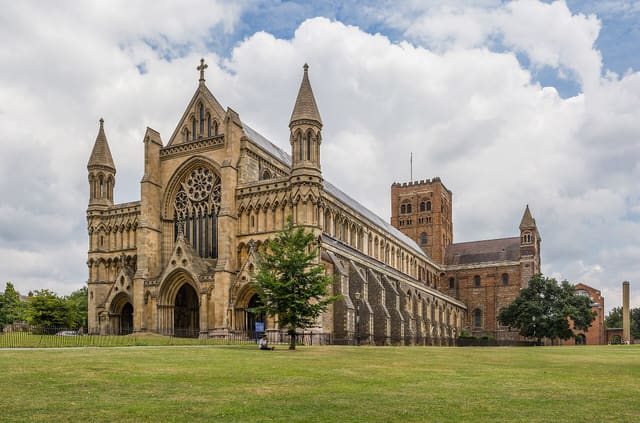
- St Albans, ten minutes away, has the cathedral, the market and the pubs; London is 25 minutes for everything else
- African and Caribbean communities are established across south Hertfordshire and in nearby north London - Luton, Watford and Wood Green all have African churches and food shops within easy reach
- Healthcare: full NHS access through the Immigration Health Surcharge, with a GP practice on campus
How to apply & the bureaucracy
One of the more straightforward UK admissions processes, with realistic entry requirements.
- Bachelor’s: apply through UCAS by the late-January deadline; Hertfordshire also considers late applications and clearing, and runs January starts on many courses
- Master’s: apply directly on the university website from September, with September and January intakes
- English proficiency: typically IELTS 6.0 overall with 5.5 in each band for bachelor’s and 6.5 with 5.5-6.0 in each band for master’s - lower than the Russell Group and realistic for most applicants
- International foundation and pre-master’s pathways are available on campus if your grades or certificate fall short of direct entry
- After the CAS, apply for the Student visa with proof of funds, the health surcharge and a TB certificate where required; some engineering master’s need an ATAS certificate, so check before you book anything
Read these guides next
Free for UK applicants
Apply to UK universities for free
UK universities pay us when a student enrols, so our help with your UK application costs you nothing. We shortlist programmes with you, check your documents and guide you through offer, deposit, CAS and visa.
- Applications to up to 5 UK universities
- Help with your deposit, CAS and Student visa
- One advisor from the first call to enrolment
Our service is free for you: UK universities pay UniBridgeEurope a fee when a student enrols. You still pay your own tuition, visa and healthcare fees.