France · Auvergne-Rhône-Alpes
Study in Grenoble: a tech and research hub in the Alps
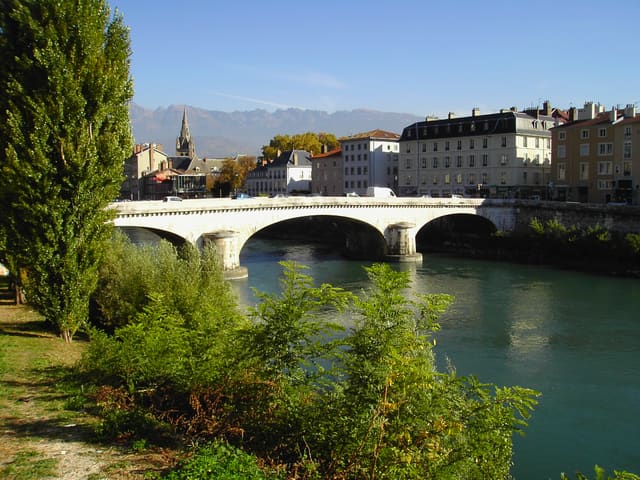
Grenoble punches far above its size. Surrounded by the Alps, it is one of Europe’s densest concentrations of research and high-tech industry - microelectronics, nanotechnology, AI and green energy - built around a strong university and a tight research-to-industry pipeline. For engineering and the sciences, it is one of the smartest, most affordable choices in France.
Why Grenoble
A genuine tech cluster in a compact, outdoor-loving student city.
- Often called a “French Silicon Valley” for microelectronics and nanotech (STMicroelectronics, Soitec, the CEA research centre)
- Université Grenoble Alpes (UGA): a large research university strong in physics, engineering, computer science and AI
- Grenoble INP (engineering) and Grenoble Ecole de Management (GEM) add specialised, internationally connected programmes
- Ringed by the Alps - skiing, hiking and an outdoor lifestyle on your doorstep
Universities & popular bachelor’s
A research-led environment where English is common in labs and a growing number of tracks.
- UGA: strong bachelor’s in physics, mathematics, computer science, data and engineering, with some English-taught tracks
- Grenoble Ecole de Management: an English-taught Bachelor in International Business with exchanges abroad
- Grenoble INP: leading engineering programmes tied directly to local industry and research institutes
- Curriculum flexibility: easy access to research projects, double degrees and exchange semesters in a third country
Career prospects & ROI
Few European cities turn study into a tech career as directly as Grenoble.
- Industry connections: semiconductors, nanotech, AI, green energy and Schneider Electric anchor the local economy
- Strong research-to-industry pipeline means internships and working-student roles in real R&D
- Post-study: master’s-level graduates qualify for the 12-month job-search permit (APS); tech skills from Grenoble are in demand EU-wide
- A strong return on a low tuition cost, especially in engineering and computer science
Cost of living in Grenoble
Estimates for the 2026 academic yearA student in Grenoble should budget around 902 € a month. The heaviest line by far is rent: a room in a shared flat goes for about 420 €, and most land between 350 € and 520 €.
- Room in a shared flat usually 350 € – 520 €
- 420 €
- Food and groceries
- 250 €
- Student travel pass
- 32 €
- Health insurance
- 25 €
- Phone, internet, electricity
- 65 €
- Books, sport, going out
- 110 €
- Monthly total
- 902 €
Ranked 1 of 8 on cost among the cities we cover in France, cheapest first.
What things cost here, against the EU
Across the whole shopping basket France sits at 107.9, where the EU average is 100 (2024).
EU average = 100
Consumer prices rose 0.9% over 2025.
Where these numbers come from
The monthly budget is our own estimate, compiled from what student unions, universities and national student services publish. Use it to plan with — it is not a quote.
The price levels, inflation and rent figures are published statistics: Eurostat purchasing power parities and, for German states, the Federal Statistical Office (Destatis).
Success stories
Students who crossed the bridge

“I wasted a year trying alone. After the strategy call I knew exactly which documents I was missing - three months later I had my admission.”Read full story →

“They prepared my visa file so well the interview took ten minutes. They even helped my parents understand the blocked account.”Read full story →

“With the VIP pack I arrived in Finland with my room, bank account and even my airport pickup organised. I just had to study.”Read full story →
What it costs
Tech-hub opportunities without big-city prices.
- Public tuition: roughly €2,900/year for a non-EU bachelor; GEM and the engineering schools cost more but add career services
- Living costs: about €750–€1,000/month, helped by affordable CROUS student housing
- Proof of funds: about €615/month for the visa - bank statement or sponsor declaration
- Part-time work: up to 964 hours a year; CAF housing aid available to international students
Life, safety & culture
An international, outdoorsy student town with an easy pace.
- Daily language is French, but the research community is highly international and English is widely used in tech and labs
- A safe, walkable, bike-friendly city with mountains visible from the streets
- A large student and researcher community from around the world
- Outdoor culture: skiing, climbing and hiking are part of student life here
How to apply & the bureaucracy
UGA via Campus France; GEM and the engineering schools run their own admissions.
- Apply to UGA through “Études en France” / Campus France in your country
- GEM and Grenoble INP have separate applications and deadlines - plan a year ahead
- English-taught tracks accept IELTS/TOEFL; French-taught programmes need DELF/DALF B2
- After admission, start the student-visa process immediately (4–12 weeks)
Read these guides next
Want UniBridgeEurope to do all of this for you?
We take African students from first choice to arrival in Europe: university shortlist, applications, student visa, flights, bank account and housing. Start with a €99 strategy call, or choose the package that comes with an admission guarantee.