Portugal · Madeira
Study in Funchal: universities, costs and careers for international students
Funchal is the outlier on this list, and it suits a particular kind of student. The University of Madeira is small - a few thousand students - so you get seminar-sized classes and staff who know your name, on an island where the temperature sits between roughly 17 and 25 degrees all year and the crime rate is close to zero. The costs of that are real: a narrow range of programmes, very little taught in English, a job market that is mostly tourism, and a flight rather than a train to anywhere else. Here is what to weigh.
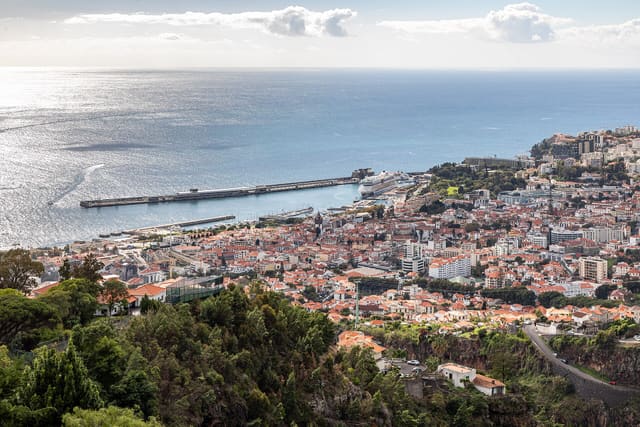
Why Funchal
Before the detail, the snapshot - what you actually get by studying on Madeira.
- The University of Madeira is a full public Portuguese university, so the degree carries the same national accreditation and EU recognition as one from Lisbon or Porto
- Small by design: a few thousand students in total, which means small cohorts, accessible lecturers and far less competition for supervision than on the mainland
- A subtropical climate with no real winter - roughly 17 to 25 degrees year-round, which removes both the heating bills and the dark-winter slump that catch many African students in northern Europe
- Tourism and hospitality are the island’s industry, so hospitality, management and tourism degrees come with a real internship market attached rather than a theoretical one
- Madeira is consistently among the safest regions of Portugal, which is itself among the safest countries in the world
Universities & popular courses
One university and a deliberately focused catalogue - check the programme list before anything else, because if your subject is not on it, it is not on the island.
- University of Madeira (UMa): faculties covering exact sciences and engineering, life sciences, social sciences and arts and humanities, plus a nursing school and a business and economics unit
- Strongest areas: informatics engineering, biology and marine sciences, nursing, management and economics, tourism and hospitality management, art and design, and psychology
- Research: the university hosts interactive-technologies and marine research groups, and its Atlantic location gives marine biology, oceanography and climate work a field site the mainland cannot match
- Teaching is overwhelmingly in Portuguese. A limited number of master’s programmes and individual course units run in English - verify this with the faculty in writing before you apply
- Curriculum: three-year bachelor’s and one-to-two-year master’s, inside the same national framework as every other Portuguese university
- Erasmus+ works in both directions here, and a semester on the mainland or elsewhere in the EU is a common way to broaden a Madeira degree
Career prospects & ROI
Be honest with yourself about the island job market - it is small, seasonal and concentrated in one sector.
- Industry connections: hotels, resorts, cruise operators and the wider tourism sector dominate, and they take interns and graduates in hospitality, management, languages and marketing every season
- The International Business Centre of Madeira, the island’s licensed low-tax business zone, hosts international services, shipping and holding companies - a small but real market for finance, law and accounting graduates
- Madeira has become a hub for remote workers, with a purpose-built digital-nomad community on the island that has grown the local technology and services scene from a very low base
- Realistically, most graduates who want a large employer move to Lisbon or Porto. Your degree lets you do that freely, and the flight is under two hours
- Work while you study: the student residence permit allows employment on the same national terms, and tourism supplies a genuine flow of term-time and summer work
- After you graduate: the national rules apply - a job-search or work residence permit through AIMA, with the current categories worth confirming rather than assuming
Cost of living in Funchal
Estimates for the 2026 academic yearA student in Funchal should budget around 790 € a month. The heaviest line by far is rent: a room in a shared flat goes for about 350 €, and most land between 270 € and 460 €.
- Room in a shared flat usually 270 € – 460 €
- 350 €
- Food and groceries
- 220 €
- Student travel pass
- 25 €
- Health insurance
- 30 €
- Phone, internet, electricity
- 70 €
- Books, sport, going out
- 95 €
- Monthly total
- 790 €
Ranked 2 of 4 on cost among the cities we cover in Portugal, cheapest first.
Cheapest on our list: Braga, at about 720 € a month. →What things cost here, against the EU
Across the whole shopping basket Portugal sits at 85.0, where the EU average is 100 (2024).
EU average = 100
Consumer prices rose 2.2% over 2025.
Where these numbers come from
The monthly budget is our own estimate, compiled from what student unions, universities and national student services publish. Use it to plan with — it is not a quote.
The price levels, inflation and rent figures are published statistics: Eurostat purchasing power parities and, for German states, the Federal Statistical Office (Destatis).
Success stories
Students who crossed the bridge

“I wasted a year trying alone. After the strategy call I knew exactly which documents I was missing - three months later I had my admission.”Read full story →

“They prepared my visa file so well the interview took ten minutes. They even helped my parents understand the blocked account.”Read full story →

“With the VIP pack I arrived in Finland with my room, bank account and even my airport pickup organised. I just had to study.”Read full story →
What it costs
Mid-range for Portugal: cheaper than Lisbon, though island logistics push some everyday prices up.
- Tuition for non-EU students at UMa: roughly EUR 3,000-6,000 a year for most programmes - confirm on the programme page, since the university sets it course by course
- EU and CPLP nationals often pay the regulated national fee of around EUR 700 a year instead; check whether an agreement covers your nationality
- Living costs: budget EUR 650-850 a month. A room in a shared flat runs EUR 300-450, and the university has a limited residence of its own - apply early, because there is far less private student housing here than on the mainland
- Imported goods, electronics and some groceries cost more than on the mainland, and every trip off the island is a flight. Budget for the journey home plus one or two mainland trips a year
- What you save: almost nothing spent on heating, low transport costs in a walkable city, and none of the deposit-and-agency inflation of the Lisbon rental market
- Scholarships: UMa awards a limited number of merit places, and the national Erasmus Mundus and Camões I.P. routes apply here as anywhere in Portugal
Life, safety & culture
The calmest student experience in this guide - which is either exactly what you want or exactly what you do not.
- Language: Portuguese, and more so than anywhere else on this list. Tourism means plenty of English in central Funchal, but university administration, housing and part-time work all run in Portuguese
- Safety: extremely low crime, and a city where walking home at night is genuinely unremarkable
- Healthcare: Madeira runs its own regional health service within the national system - register with a health centre once your residence permit is issued, and Funchal’s central hospital covers the island
- The outdoors is the culture here: levada walks, mountains, year-round swimming and a student body that spends its weekends outside. Funchal’s nightlife is small and hotel-adjacent rather than a student scene
- The trade-off is isolation. The international student community is small, and if you need a large diaspora network around you, Lisbon is the better choice
How to apply & the bureaucracy
The same national process, run by a small office - which usually means a faster answer than the mainland gives you.
- Bachelor’s: apply through UMa’s international student competition, which follows the national calendar and generally opens in the spring for a September start. WAEC, NECO and equivalent certificates are accepted
- Master’s: apply directly to the faculty, with a September intake. A recognised bachelor’s, transcripts, CV and motivation letter is the standard package
- Language proficiency: B2 Portuguese for Portuguese-taught programmes, usually a CAPLE certificate; IELTS 6.0-6.5 or TOEFL iBT 79-90 where a programme runs in English
- Confirm the language of instruction in writing before you commit - this is the single most common mistake international applicants make with Madeira
- Have your certificates apostilled or consular-legalised and sworn-translated at home, then apply for the type D student visa at the Portuguese consulate. Once on the island, book your AIMA appointment for the residence permit
Read these guides next
Want UniBridgeEurope to do all of this for you?
We take African students from first choice to arrival in Europe: university shortlist, applications, student visa, flights, bank account and housing. Start with a €99 strategy call, or choose the package that comes with an admission guarantee.